
Short answer: A sudden ranking drop usually traces to one of a handful of causes: a Google algorithm update, a change or suspension on your Google Business Profile, lost or removed reviews, a technical problem on your website, a competitor pulling ahead, or an inconsistent change to your name, address, or phone number. The first step is not to change anything. It is to figure out whether the drop hit Maps, organic search, or both, and pin down exactly when it happened.
A ranking drop is a symptom, not the disease. React before you know the cause and you can make it worse by “fixing” things that were never broken. Slow down, gather the facts, and diagnose it properly. Most drops have a clear reason once you know where to look.
Key Takeaways
- Most sudden drops trace to one of six causes: an algorithm update, a Google Business Profile change, lost reviews, a technical site issue, a competitor, or a NAP inconsistency.
- Your first move is diagnosis, not action. Pin down the date and whether it was Maps, organic, or both.
- Small daily fluctuations are normal. A one or two spot wiggle is not a drop worth chasing.
- A GBP suspension or a broken website will tank you fast, and both are usually fixable once found.
- Do not panic-change everything at once, or you will never know what actually worked.
Common Causes of a Ranking Drop at a Glance
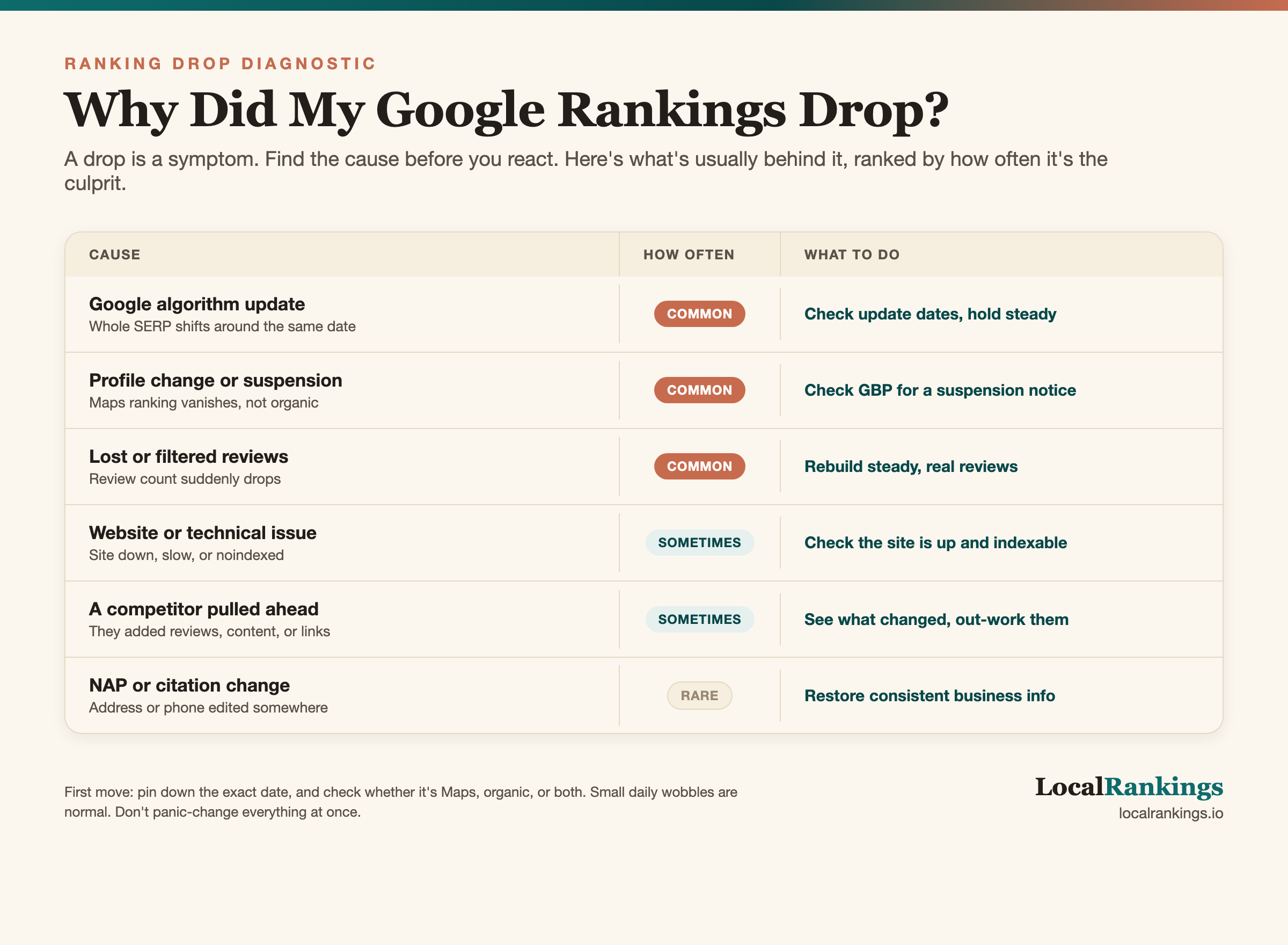
| Cause | Signs | What to do |
|---|---|---|
| Algorithm update | Broad drop across many keywords on the same date | Check for a known update, hold steady, do not overreact |
| GBP change or suspension | Maps ranking gone, profile shows suspended or edited | Review profile status, appeal a suspension, undo bad edits |
| Lost or filtered reviews | Review count dropped, Maps position slipped | Check for removed reviews, keep earning real ones |
| Website or technical issue | Site down, slow, noindexed, or pages returning errors | Confirm the site loads and is indexable, fix errors fast |
| Competitor gaining ground | One or two competitors jumped ahead of you | See what they changed, then close the gap |
| NAP or citation change | You edited your address, phone, or name recently | Make your business info consistent everywhere again |
The Usual Causes (and How to Diagnose Each)
A Google algorithm update. A few times a year Google rolls out a big core update. If your drop hit many keywords at once on the same date, and competitors moved too, an update is the likely cause. These are not penalties. Google reweighted what it values, so the fix is to keep improving genuine quality, not to chase the update.
A Google Business Profile change or suspension. For local businesses this is one of the most common and most painful causes. If your Maps ranking vanished, check your profile first. A suspension, an unwanted edit to your listing, a changed category, or removed hours can all sink your map pack position overnight. Suspensions can be appealed and bad edits reverted.
Lost or filtered reviews. Reviews are a real ranking signal in Maps. If Google filters or removes a batch of reviews, your count drops and your position can slip with it. Check whether your review count fell around the time your ranking did.
A website or technical issue. This one catches people off guard. If your site went down, got very slow, was accidentally set to noindex during a redesign, lost pages in a broken migration, or started returning errors, Google will pull your rankings. A single wrong setting after a site update can do it. Confirm the site loads, is indexable, and that key pages still return a normal 200 status.
A competitor gaining ground. Sometimes nothing is wrong with you. A competitor earned links, added content, gathered reviews, or fixed their profile and passed you. Rankings are relative. If only a keyword or two slipped and one specific competitor is now above you, look at what they did.
NAP or citation changes. NAP means name, address, and phone number. If you changed any of those recently, or a directory has a stale version, the inconsistency confuses Google about which business you are. Even a moved office or a new number can cause a temporary dip until everything lines up again.
Lost backlinks. If a site that linked to you took the link down or went offline, you lose the authority that link passed. A sudden drop in referring domains can move rankings, especially in competitive markets.
A manual penalty or spam flag. Rarer, but real. If you bought links, stuffed keywords, or used a shady tactic, Google can apply a manual action. You will see a notice in Search Console if it happened. It is fixable, but you have to clean up the problem and request a review.
How to Diagnose It
Work through these in order. Do not skip to fixing.
- Pin down the exact date. A specific start date tells you a lot. Line it up against known algorithm updates, a site change you made, or a profile edit.
- Check Maps versus organic. Did you lose your map pack position, your organic listings, or both? Maps problems usually point to your Google Business Profile. Organic problems point to your website or a core update.
- Check Google Search Console. Look for manual action notices, coverage or indexing errors, and a drop in impressions. This is where Google tells you directly if something is wrong.
- Check your Google Business Profile dashboard. Confirm the profile is live and not suspended, your categories and hours are correct, and no unwanted edits went through.
- Confirm the site is up and indexable. Load your site. Check that it is fast, key pages are not noindexed, and nothing returns an error.
- Look at what competitors changed. If one competitor jumped ahead, study their profile, reviews, and pages. The gap is usually visible.
What Not to Do
Do not panic-change everything at once. If you rewrite your site, edit your profile, and swap your keywords all in the same afternoon, you will never know what caused the drop or what fixed it. Change one thing, then watch.
Do not assume it is permanent. Many drops recover on their own, especially fluctuations around an update or a temporary technical hiccup. Give it a little time before you tear things apart.
Do not chase normal noise. Rankings move a spot or two every day. That is not a drop. Look for a real, sustained decline across the board before you treat it as a problem.
What LocalRankings Does
We are a Dade City, Florida local SEO and web design shop, and diagnosing ranking drops is bread and butter for us. When a business owner calls in a panic, we do exactly what this article describes: pin down the date, separate Maps from organic, check the profile and the site, and find the actual cause before touching anything. Then we fix the real problem and rebuild the momentum. If your rankings dropped and you want a straight answer on why, take a look at what we do or get in touch and we will help you figure it out.
Frequently Asked Questions
Why did my Google rankings suddenly drop?
A sudden drop usually traces to one of a few causes: a Google algorithm update, a change or suspension on your Google Business Profile, lost or removed reviews, a technical problem on your website, a competitor pulling ahead, or an inconsistent change to your name, address, or phone number. Start by pinning down the date and whether the drop hit Maps, organic search, or both.
How do I recover lost Google rankings?
First find the cause, then fix that specific thing. If it was a profile suspension, appeal it. If a site change broke something, revert it. If reviews were lost, keep earning real ones. If a competitor passed you, close the gap. Recovery timelines vary, but rankings usually come back once the underlying issue is resolved and Google recrawls your site.
Do Google rankings fluctuate normally?
Yes. Rankings move a spot or two every day as Google reindexes and tests results. That normal noise is not a drop worth chasing. Only treat it as a real problem when you see a sustained decline across many keywords rather than a small daily wiggle.
Can losing reviews drop my rankings?
Yes, especially in Google Maps, where reviews are a real ranking signal. If Google filters or removes a batch of reviews, or a platform purges some, your count falls and your map position can slip with it. Check whether your review count dropped around the same time your ranking did.
How long does it take to recover rankings?
It depends on the cause. A reverted site setting or an approved profile appeal can recover within days to a few weeks once Google recrawls. A drop from a core update or lost authority takes longer, since recovery follows the same compounding timeline as regular local SEO. Our guide on how long local SEO takes to work walks through what to expect.
Why did my Google Maps ranking drop?
Maps drops almost always point to your Google Business Profile. Check for a suspension, an unwanted edit to your categories or hours, removed reviews, or a recent change to your name, address, or phone number. Fixing the profile issue usually restores your map pack position.
Should I change my whole SEO strategy after a drop?
No. Overhauling everything at once means you will never know what caused the drop or what fixed it. Diagnose the specific cause first, change one thing, and watch how rankings respond before making the next move.